
Would you feel comfortable if everyone in your office knew how much you were being paid? Well, this is why privacy matters. Privacy isn’t about secrecy or having something to hide. It is more about autonomy and control; having the fundamental right to decide who gets to know what about you, and how that information can be used.
While this may seem extreme, there was a failed attempt to kidnap the daughter and grandson of a crypto company boss in May 2025. Things could have quickly gone south because the masked gang was armed.
This and other similar incidents suggest that these attacks are highly targeted. Attackers use some form of digital data to identify the victim's family and their vulnerabilities.
On a lighter note, you lock your diary, not because it contains incriminating evidence, but because it contains your innermost thoughts, dreams, and vulnerabilities. Privacy is the digital equivalent of these boundaries. When you browse, shop, or chat online, you are essentially wandering through your digital home, and without privacy tools, your every move is being recorded, analyzed, and filed away by entities you've never met.
You may never be held hostage for ransom, but in today’s digital economy, your data is often used to subtly manipulate you. When a company knows your health concerns or financial anxieties, they can serve you highly targeted content, news, or ads designed to exploit your weaknesses.
Consensus Mechanisms: PoW Vs. PoS

Blockchains are decentralized, not controlled by a single entity. How do they then make decisions since no single person is in charge? This brings us to the concept of “consensus mechanisms.”
A consensus mechanism is the digital rulebook that governs agreement. How does a network of thousands of anonymous computers scattered across the globe agree on a single, immutable truth without a central boss telling them what to do?
The blockchain space is dominated by two contrasting approaches, each with its own trade-offs. We have the Proof-of-Work (PoW) pioneered by Bitcoin, and the Proof-of-Stake (PoS), which was first implemented by Peercoin.
In PoW networks, the participants are called Miners. They compete to solve a complex, randomized mathematical puzzle (finding a specific hash). The first miner to find the solution wins the right to add the next block of transactions and is rewarded with new coins and fees. This process requires immense computational power and consumes significant energy.
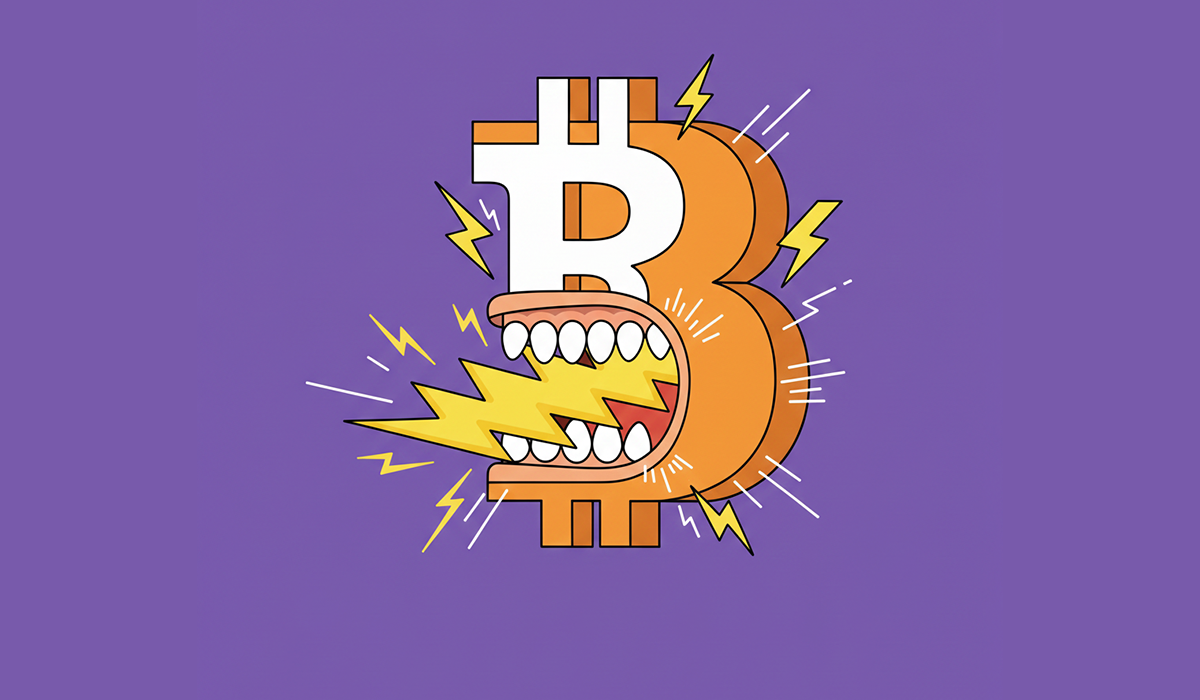
Fun Fact: Bitcoin chews up approximately 160 terawatt-hours of electricity annually. That's about the same electricity produced by 46 coal-fired power plants working hard for a whole year.
PoS networks, on the other hand, have validators. This consensus mechanism was introduced as an alternative to address PoW’s environmental concerns. Validators lock up or stake a quantity of the network's native cryptocurrency as collateral. Instead of competing to solve puzzles, the network algorithm randomly selects a validator to propose and finalize the next block, with the probability of selection being proportional to the size of their stake.
PoS is dramatically more energy-efficient and allows for much faster transaction speeds. However, some critics argue it can lead to a “rich get richer” dynamic, as those with larger stakes earn proportionally higher rewards and wield more influence.
PIVX is an example of a blockchain network that uses the PoS consensus algorithm.
Fun Fact: Staking on the PIVX network yields an estimated APY of around 13%.
PIVX History Timeline
- January 2016: The project was initially launched under the name Darknet (DNET).
- Mid-2016: After 259,200 blocks, the network transitioned from a Proof-of-Work distribution phase to a full Proof-of-Stake (PoS) consensus model.
- January 2017: Successfully rebranded to PIVX (short for Protected Instant Verified Transaction). The network is governed through a robust Decentralized Autonomous Organization (DAO), where masternode holders vote on proposals and budget allocation.
- October 2017: PIVX achieved a major milestone by becoming the first Proof-of-Stake network to enable optional, secure transaction anonymity.
- 2020: The development team successfully delivered SHIELD, a fully customized, open-source integration of the advanced cryptographic protocol zk-SNARKs.
- 2020-2025: Multiple exchange listings and numerous vendor integrations, expanding usability and reach. A Global PIVX Ambassador Program (GPAP) was launched in 2025.
The ABC of Privacy Protocols
To set the record straight, Bitcoin and Ethereum transactions are not anonymous. They are pseudonymous, meaning your real-world identity can be revealed if someone is able to connect the dots. There are tens and perhaps hundreds of privacy-centric blockchains, each trying to solve this transparency problem in a unique way. You may already be familiar with privacy coins like Monero, ZCash, and PIVX.
Here’s a quick rundown of the most popular privacy protocols.
- Zero-Knowledge Proofs (ZKPs): These cryptographic protocols allow you to prove a statement (like having enough funds) without revealing the actual underlying data, such as your balance. Projects like PIVX and Zcash implement this technology for private transactions.
- Stealth Addresses: These generate a unique, one-time address for every transaction received, preventing external parties from linking your payments to your main public address. This is a core feature of Monero.
- Ring Signatures: They mix your transaction with several others (the "ring"), ensuring that observers cannot identify the true sender among the group. This is another technology that is prominently used by Monero.
- Confidential Transactions: CTs conceal the amount being transferred in a transaction, preventing outsiders from analyzing your financial patterns. They are implemented in coins like Monero, Grin, and Beam.
- Coin Mixing/Tumbling: This process combines and shuffles coins from many users and then returns equivalent value, effectively breaking the traceable link in the transaction history. Mixing is used in protocols like CoinJoin (integrated into wallets like Samourai Wallet and Wasabi Wallet).