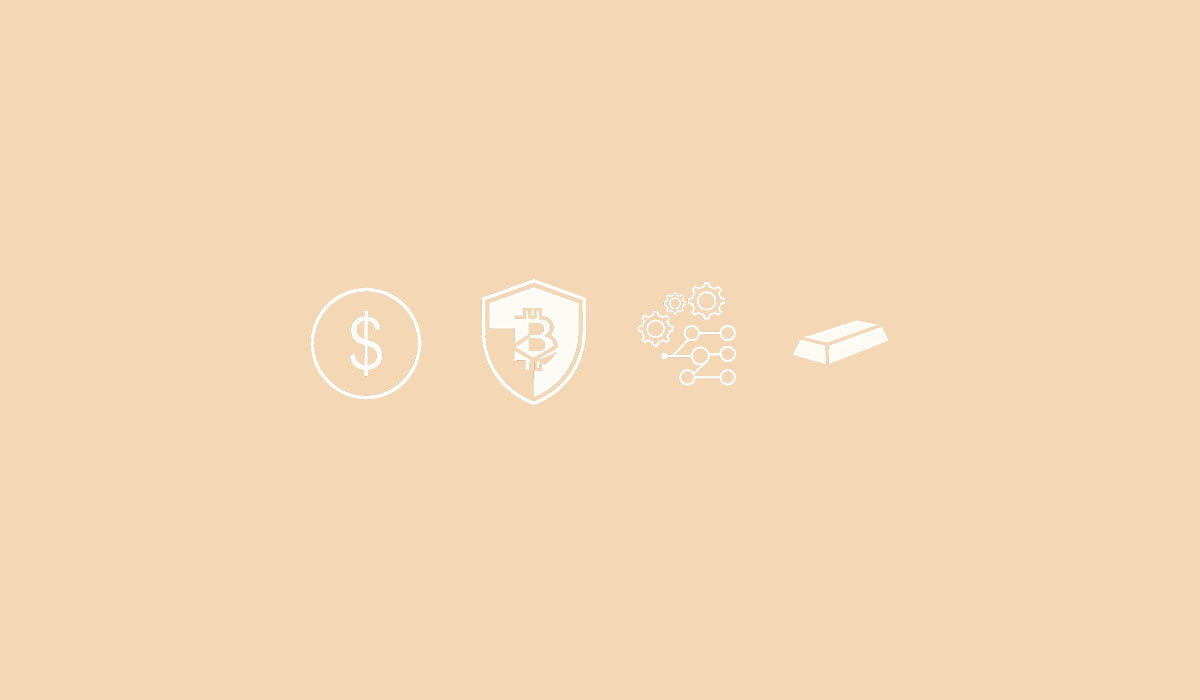
Stablecoins can be broadly categorized into four main types based on their collateralization mechanism.
1. Fiat-Backed Stablecoins
Fiat-backed stablecoins are the most common and straightforward type. They maintain their peg by holding an equivalent amount of traditional fiat currency (like USD, EUR, or GBP) in reserve. For every stablecoin issued, there is a corresponding unit of fiat currency held in a bank account or highly liquid assets such as short-term government securities. It is worth mentioning that some stablecoins are pegged to a variety of asset classes.
Some examples of fiat-backed stablecoins are Tether (USDT), USD Coin (USDC), TrueUSD (TUSD), Gemini Dollar (GUSD), PayPal USD (PYUSD), and First Digital USD (FDUSD).
Pros:
- Simple to understand - one stablecoin equals one unit of the pegged fiat currency.
- Easy to use and widely accepted.
- High stability since they generally maintain their peg very well due to direct backing by a stable asset.
Cons:
- Centralization risks that go against the decentralized ethos of many cryptocurrencies.
- It can be frozen or blocked in rare cases.
- Due to their centralized nature and connection to traditional finance, they are subject to increasing regulatory oversight.
2. Crypto-Backed Stablecoins
Instead of using real cash, these stablecoins are backed by other cryptocurrencies. To account for the inherent volatility of cryptocurrencies, these stablecoins are typically "over-collateralized." This means that a larger value of cryptocurrency is held in reserve than the value of the stablecoins issued (e.g., $150 worth of Ethereum might back $100 worth of stablecoin). Smart contracts automatically manage the collateral and the stablecoin's supply.
One popular example of a crypto-backed stablecoin is DAI.
Pros:
- They are generally more decentralized than fiat-backed stablecoins.
- All transactions and collateral are visible on the blockchain.
- Less susceptible to government intervention or freezing of funds.
Cons:
- They are still susceptible to the volatility of the underlying cryptocurrencies.
- The mechanisms for maintaining the peg can be more complex and harder to understand for the average user.
- If the value of the collateral drops below a certain threshold, the collateralized position may be liquidated.
3. Algorithmic Stablecoins
Algorithmic stablecoins aim to maintain their peg without relying on any external collateral (fiat, crypto, or commodity). Instead, they use complex algorithms and smart contracts to automatically adjust the supply of the stablecoin based on demand. When the price goes above the peg, the algorithm might increase the supply (mint new coins); when it goes below, it might decrease the supply (burn coins or incentivize users to buy and hold). Some algorithmic stablecoins use a two-token system, where a volatile token absorbs price fluctuations to stabilize the main stablecoin. TerraClassicUSD (USTC) was a prominent algorithmic stablecoin that famously lost its peg.
Other examples include Ethena USDe (USDE) and Frax, which is partially algorithmic.
Pros:
- They are designed to be highly decentralized, relying purely on code and economic incentives.
- They do not require large reserves of collateral, potentially making them more capital-efficient.
Cons:
- Historically, algorithmic stablecoins have proven to be the riskiest type, with several prominent examples (like TerraUSD) failing dramatically during periods of high market stress.
- The underlying algorithms may not always be robust enough to handle extreme market conditions or "bank runs."
- Their stability often depends on continuous growth and demand, making them vulnerable to confidence crises.
- In a crisis, there are no real assets to redeem the stablecoin for, making recovery difficult.
4. Commodity-backed Stablecoins
Commodity-backed stablecoins are pegged to the value of tangible assets like precious metals (e.g., gold, silver), oil, or real estate. Each stablecoin represents a specific amount of the underlying commodity, which is typically held in secure vaults by a custodian.
Examples include Pax Gold (PAXG) and Tether Gold (XAUt).
Pros:
- They are backed by real, physical assets, which can instill confidence
- Commodities like gold have historically served as a reliable store of value.
- They offer a convenient way to gain exposure to commodities without the complexities of physical storage and transfer.
Cons:
- Similar to fiat-backed stablecoins, they rely on a central entity to custody the physical commodity.
- Maintaining and auditing physical reserves can be costly.
Fun Fact: The collapse of TerraUSD (UST) was the most spectacular fall in crypto history. It wasn’t just a simple trip; it was a full-blown chaotic spectacle that took its sister coin, Luna, down with it in a matter of days. This is what could happen when a stablecoin loses its peg.